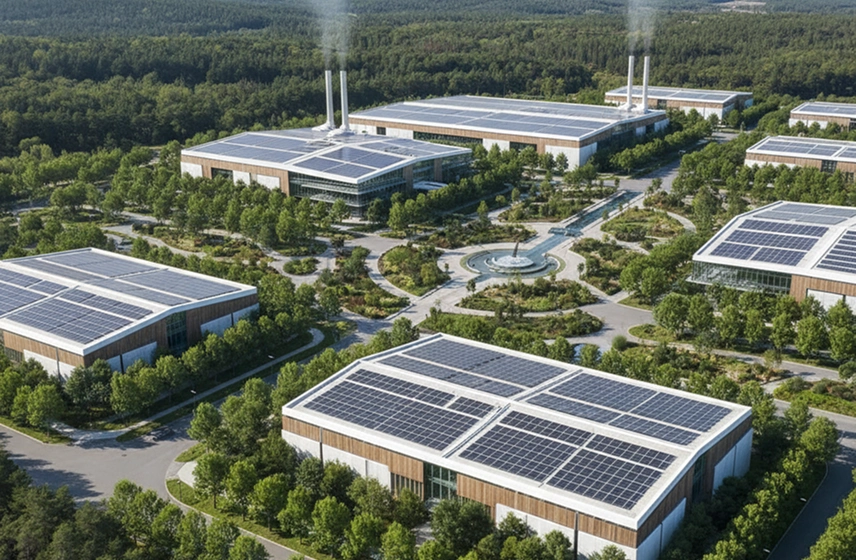
Green Industrial Parks and the Future of Sustainable Manufacturing
Sustainability is becoming a central consideration in the development of modern industrial parks. As manufacturers and investors place greater emphasis on environmental responsibility, industrial infrastructure is evolving to support cleaner, more efficient, and more sustainable production.
A green industrial park goes beyond traditional infrastructure. It integrates environmental management, efficient resource use, wastewater treatment, green spaces, energy efficiency, and sustainable planning into the overall development model. The goal is to create an industrial environment where economic growth and environmental responsibility can develop together.
One important element is water management. Modern industrial parks require reliable water supply and effective wastewater treatment systems to support manufacturing activities while protecting surrounding ecosystems. Advanced treatment and water reuse solutions can help reduce resource consumption and improve environmental performance.
Energy management is another key area. Manufacturers are increasingly interested in energy-efficient facilities and renewable energy solutions. Industrial parks can support these goals through efficient infrastructure, renewable energy integration, smart energy management, and environmentally conscious planning.
Green industrial development can also create business value. International companies increasingly consider environmental, social, and governance factors when selecting suppliers, manufacturing locations, and investment destinations. An industrial park with strong sustainability standards can therefore become an attractive location for companies with ambitious environmental objectives.
Sustainable industrial parks can also encourage cooperation between businesses. Companies operating within the same ecosystem may have opportunities to share resources, services, infrastructure, or by-products. This approach can contribute to the development of more circular and resource-efficient industrial systems.
Transportation is another important part of sustainability. Industrial parks with strong connections to ports, highways, waterways, and logistics facilities can help businesses optimize transportation routes and potentially reduce unnecessary movement of goods.
The future of manufacturing will increasingly depend on the ability to balance productivity with environmental responsibility. Industrial developers therefore have an important role in creating infrastructure that supports both business growth and sustainable development.
For investors considering Vietnam, green industrial parks offer an opportunity to establish manufacturing operations within an environment designed for long-term development. By combining modern infrastructure, efficient resource management, environmental protection, and strong logistics connectivity, sustainable industrial parks can contribute to a more competitive and resilient manufacturing ecosystem.
Green industrial development is not simply an environmental trend. It is becoming an important part of the future of global manufacturing and a key factor in creating industrial destinations that remain competitive for decades to come.